
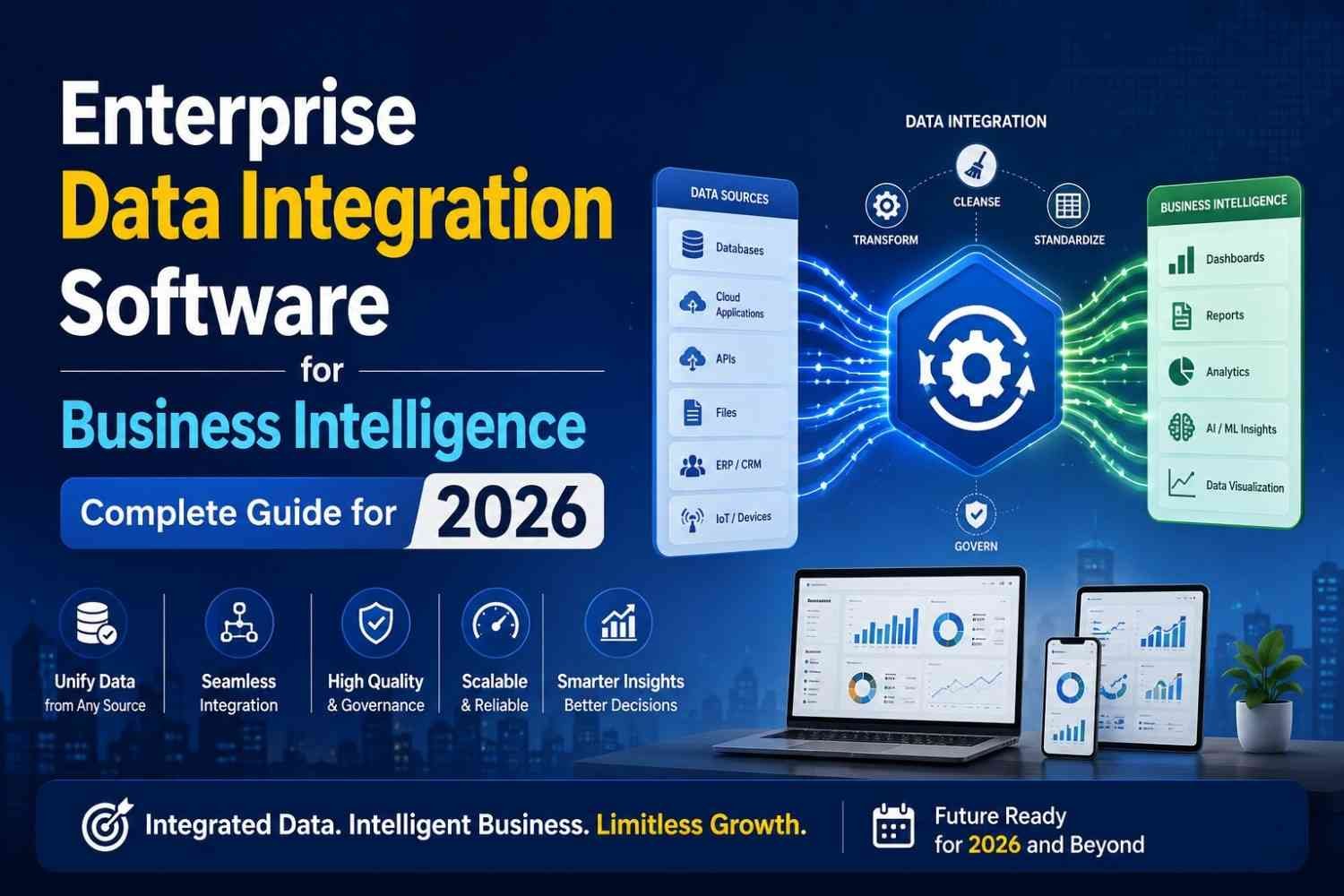
Modern enterprises generate enormous amounts of data from various systems, including ERP software, CRM platforms, accounting applications, cloud services, supply chain systems, cybersecurity platforms, and business applications.
While data has become one of the most valuable business assets, many organizations struggle with fragmented information spread across multiple systems. Disconnected data creates several challenges: inconsistent reporting, poor decision-making, data silos, operational inefficiencies, compliance risks, and limited business visibility.
This is where Enterprise Data Integration Software becomes essential. Data integration platforms help organizations connect, transform, and centralize information from multiple sources into a unified ecosystem that supports business intelligence, analytics, automation, and enterprise decision-making.
What Is Enterprise Data Integration Software?
Enterprise Data Integration Software is a platform that connects data from multiple applications, databases, cloud systems, and business tools into a centralized environment.
The software enables organizations to consolidate data sources, improve reporting accuracy, support analytics initiatives, enhance operational visibility, automate data workflows, and improve compliance management. It provides a single source of truth for business intelligence and decision-making.
Why Data Integration Is Critical for Modern Enterprises
Today's enterprises rely on numerous software platforms, including ERP Software, CRM Software, Financial Management Software, HR Management Systems, Supply Chain Platforms, Marketing Automation Software, and Business Intelligence Platforms. Without integration, data remains isolated within individual applications, creating reporting inconsistencies and limiting organizational visibility.
Key Benefits of Enterprise Data Integration Software
1. Improved Business Intelligence
Helps consolidate information, eliminate duplicates, improve reporting accuracy, and enhance analytics capabilities for reliable insights.
2. Better Operational Efficiency
Automates data collection, transformation, synchronization, and workflow processes to reduce operational costs and improve productivity.
3. Enhanced Data Quality
Removes duplicate records, standardizes information, improves data accuracy, and maintains consistency.
4. Faster Decision-Making
Provides live dashboards, automated reporting, KPI monitoring, and predictive analytics for quicker responses to changing business conditions.
Core Features of Enterprise Data Integration Software
Data Connectivity
Connects with ERP Systems, CRM Platforms, Cloud Applications, Databases, Financial Software, and Supply Chain Systems.
Data Pipeline Automation
Automates the movement of information between systems for reduced manual work and real-time synchronization.
Data Transformation
Standardizes information, converts formats, cleans data, and enriches records.
AI-Powered Data Integration
AI-powered integration platforms can detect anomalies, improve data quality, automate mappings, optimize workflows, and identify patterns.
Cloud Data Integration
Cloud Data Integration Software helps businesses connect cloud and on-premise systems with scalability, flexibility, and cost efficiency.
How to Choose the Right Enterprise Data Integration Software
Organizations should evaluate connectivity options, scalability, analytics integration, security features, and automation capabilities before selecting a platform.
Enterprise Data Integration Trends for 2026
- AI-Driven Integration
- Real-Time Analytics
- Data Fabric Architectures
- Cloud-Native Integration
- Advanced Data Governance
Frequently Asked Questions
What is Enterprise Data Integration Software?
Enterprise Data Integration Software connects multiple business systems and centralizes information to support analytics, reporting, and decision-making.
Why is data integration important?
It eliminates data silos, improves reporting accuracy, enhances analytics, and supports operational efficiency.
How does AI improve data integration?
AI automates data mapping, improves quality, detects anomalies, and optimizes integration workflows.
Conclusion
Enterprise Data Integration Software has become a foundational technology for organizations seeking to improve analytics, enhance business intelligence, and support digital transformation initiatives.
By connecting data sources, automating workflows, improving governance, and enabling predictive analytics, these platforms help enterprises make smarter decisions and operate more efficiently.
As organizations continue investing in cloud technologies, AI automation, and business intelligence, Enterprise Data Integration Software will remain one of the most important enterprise software categories throughout 2026 and beyond.